




How Everyday Driving Choices Affect Your Car Experience
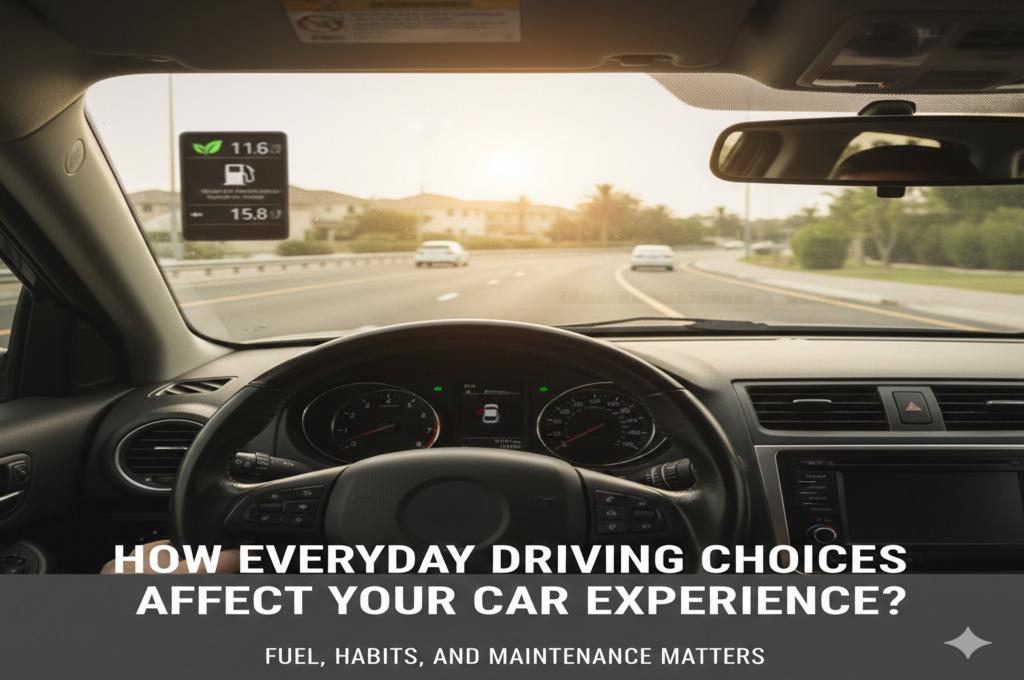
The relationship between a driver and their vehicle is dynamic. Every turn of the wheel, every press of the pedal sends a message to the machine. Over time, these inputs shape how the car feels and responds. For drivers in the United Arab Emirates, where conditions are demanding, this relationship is even more critical.
Many of us view our cars as simple appliances that get us from A to B. However, the reality is that everyday driving habits impact car performance in profound ways. The cumulative effect of your daily choices can either preserve the new-car feel or accelerate its decline.
Understanding this connection empowers you to take control of your ownership experience. It allows you to enjoy a smoother, safer, and more economical drive. This guide explores how small adjustments in your routine can lead to significant improvements in vehicle behaviour.
Why Small Driving Habits Matter More Than Most Drivers Realise
We often think that car damage comes from major accidents or catastrophic failures. In truth, the slow degradation of performance is usually the result of thousands of tiny actions. It is the death by a thousand cuts for your vehicle’s mechanical integrity.
A slightly aggressive turn here, a hard brake there—individually, they seem insignificant. But repeated daily over a year of commuting, they alter the suspension geometry and engine response. Your car learns your habits, for better or worse.
This is particularly relevant for daily commuters who drive the same route repeatedly. The repetitive nature of the drive reinforces these patterns. Breaking the cycle of wear requires conscious effort and awareness.
The Difference Between Occasional Mistakes and Daily Patterns
Everyone makes a mistake occasionally. Hitting a pothole you didn't see or braking too late once in a while is normal. Cars are engineered to handle these isolated stress events without failure.
However, daily patterns are different. Consistently accelerating hard from every traffic light is a pattern. Always turning the steering wheel while the car is stationary is a pattern. These consistent stresses do not give the components time to recover or operate normally.
It is the difference between a single heavy workout and chronic overtraining. The vehicle parts—rubber, metal, and fluid—fatigue faster under constant, repetitive strain. Identifying these patterns is the first step to correcting them.
How Cars Respond to Repetitive Driver Behaviour
Modern vehicles have adaptive learning systems for engines and transmissions. They adjust shift points and throttle response based on your driving style. If you drive aggressively, the car holds gears longer, expecting power demands.
This can make the car feel jerky or highly strung during a relaxed drive. Conversely, if you drive smoothly, the car optimizes for efficiency and comfort. You are effectively training your car how to behave.
Mechanically, repetitive stress creates play in the suspension and steering. This leads to a vague feeling where the car doesn't respond instantly. It erodes the sense of precision and safety that a well-maintained car should have.
Acceleration and Braking Choices Shape Vehicle Comfort
Comfort is not just about soft seats and air conditioning. It is about the physical forces acting on your body. The way you accelerate and brake determines how much you are thrown around in your seat.
Smooth inputs create a fluid driving experience. They allow the suspension to settle and absorb road imperfections. Jerky inputs upset the chassis balance, making the ride feel harsh and unsettled.
For passengers, this difference is even more noticeable. A smooth driver makes passengers feel safe and relaxed. An erratic driver induces motion sickness and anxiety.
Aggressive Driving and Its Effect on Ride Quality
Aggressive acceleration causes the rear of the car to squat. Aggressive braking causes the nose to dive. This constant pitching motion is uncomfortable and tiring over long journeys.
It also prevents the suspension from doing its primary job—absorbing bumps. When the suspension is compressed from hard braking, it has no travel left to handle a pothole. This results in a jarring impact that shakes the whole cabin.
This driving style also increases noise levels. The engine roars, the tyres screech, and the wind noise increases with sudden speed bursts. It turns a peaceful commute into a noisy, stressful event.
Smooth Control and Long Term Driving Ease
Smooth driving is an art form. It involves anticipating traffic flow so you rarely have to come to a complete stop. It means squeezing the pedals progressively rather than stomping on them.
This style keeps the car level and composed. It allows the tyres to maintain optimal contact with the road. The result is a ride that feels like gliding rather than stumbling.
Over time, this reduces driver fatigue significantly. You arrive at your destination feeling fresher because you haven't been fighting the car. It makes the daily grind of Sharjah or Dubai traffic much more bearable.
Everyday Driving and Its Impact on Tyres
Tyres are the most honest witnesses of your driving style. They record every hard corner and locked brake in their wear patterns. Unlike other components, tyre damage is visible and directly affects safety.
Your driving choices determine whether your tyres last 60,000 kilometres or 20,000 kilometres. They also determine how quiet and grippy those tyres remain throughout their life.
In the UAE, where heat already stresses rubber, your input is the deciding factor. Treating your tyres with respect saves you money and keeps you safe on the highway.
Driving Style and Uneven Tyre Wear
Aggressive cornering scrubs the shoulders of the tyres. This leads to rounded edges and reduced grip in future turns. Spinning the wheels on acceleration strips the tread from the centre or drive wheels.
Locking the brakes, even momentarily, creates flat spots. These flat spots cause a rhythmic thumping noise that ruins ride comfort. Once a wear pattern is established, it is often irreversible.
Financial implications are real when replacement becomes necessary. For instance, drivers checking the 205/60r16 tyre price in uae often realize that premature replacement due to poor habits is a costly mistake. This size is common for many daily drivers, and doubling your tyre consumption doubles your maintenance budget.
How Road Conditions in UAE Amplify Tyre Stress
The roads here can be abrasive, and the asphalt gets incredibly hot. When you add aggressive driving friction to this heat, the rubber degrades rapidly. It can even lead to chunks of rubber tearing off the tread.
Sand on the road reduces traction, causing micro-slips every time you accelerate hard. This acts like sandpaper on the tyre surface. Smooth driving minimizes this slippage and preserves the rubber.
Urban traffic involves frequent turning, often on concrete surfaces in parking lots. Turning the steering wheel while stationary grinds the rubber into the abrasive surface. Always try to be moving slightly before turning the wheel to save your tyres.
Fuel Efficiency Is Closely Linked to Daily Driving Decisions
Fuel is a recurring cost that you have direct control over. Your right foot is the most effective fuel-saving device in the car. Driving style affects fuel consumption more than almost any mechanical factor.
Aggressive driving can increase fuel consumption by up to 30 percent. That is money evaporating from your wallet with every journey. Efficient driving is not about driving slow; it is about driving smart.
Maintaining momentum is the key. Every time you brake, you waste the energy you used fuel to generate. Every time you accelerate, you burn fuel to overcome inertia.
Stop Start Traffic and Fuel Waste
In Dubai and Sharjah traffic, stop-start conditions are inevitable. However, how you handle them matters. Rushing to close a gap only to brake hard again is the worst thing for efficiency.
Leaving a buffer zone allows you to roll slowly while others stop. This keeps the car moving and reduces the energy needed to get back up to speed. It smooths out the traffic wave for you and those behind you.
Idling is another fuel waster. If you are going to be stopped for more than a minute, it is often worth switching off the engine. Modern cars with start-stop technology do this automatically for a reason.
Consistent Speed and Smarter Fuel Use
On the open highways towards Abu Dhabi or Fujairah, consistency wins. Constant small adjustments to the throttle use more fuel than holding a steady pedal. Using cruise control on flat roads helps maintain this consistency.
Speed also plays a huge role. Air resistance increases exponentially with speed. Driving at 140 km/h uses significantly more fuel than driving at 120 km/h. Finding a comfortable, legal cruising speed saves money.
Anticipating hills or flyovers helps too. Accelerate gently before the climb rather than forcing a downshift midway up. This uses the car's momentum to help climb the gradient efficiently.
How Driving Choices Influence Steering and Handling
Steering is your primary connection to the road. It tells you what the front wheels are doing. Your habits can either preserve this connection or dull it over time.
Treating the steering mechanism with care ensures it remains precise. Abusing it leads to play in the system and a wandering feeling on the highway. This affects your confidence and ability to place the car accurately.
Over Steering and Its Long Term Effects
Turning the wheel forcefully to its stops (full lock) puts immense pressure on the power steering pump. Holding it there causes pressure buildup that can blow seals. This is a common cause of power steering leaks.
Hitting curbs or parking stops while turning shocks the steering rack. This can bend tie rods or damage the internal gears. It throws off the alignment, leading to the tyre wear issues mentioned earlier.
Aggressive steering inputs also wear out suspension bushings. These rubber parts isolate vibration. When they fail, the steering feels loose and rattles over bumps.
Balanced Steering for Predictable Handling
Smooth steering inputs keep the car balanced. You should feed the wheel through your hands rather than jerking it. This allows the suspension to load up progressively in a corner.
This predictable weight transfer gives you more grip and control. It prevents the car from surprising you with sudden oversteer or understeer. It makes you a safer and faster driver in real-world conditions.
A car that is steered smoothly feels more stable. Passengers are less likely to be thrown side-to-side. It creates a sense of professional competence in your driving.
Daily Driving Behaviour and Vehicle Longevity
The ultimate reward for good driving habits is a car that lasts longer. We all want our vehicles to be reliable and trouble-free. Your daily choices are the biggest factor in achieving this reliability.
Mechanical empathy—feeling what the car is doing—prevents damage. It means not forcing a gear lever or ignoring a strange noise. It means letting the car warm up before demanding full power.
Short Trips, Cold Starts, and Wear
Short trips are silent killers of engines. The oil never gets hot enough to burn off condensation and fuel contaminants. This leads to sludge buildup and internal corrosion.
If you must make short trips, try to combine them. Or take the long way home occasionally to get the engine hot. Avoid high revs until the temperature gauge is in the normal range.
Cold starts are when most engine wear occurs. Waiting just 30 seconds before driving off allows oil to circulate. Driving gently for the first few minutes protects the engine bearings and turbochargers.
Consistent Driving Patterns and Mechanical Health
Cars thrive on consistency. Regular use is better than sitting parked for weeks. Smooth operation is better than erratic bursts.
Consistent driving patterns make it easier to spot when something is wrong. You know how the car should feel and sound. This early detection allows you to fix small problems before they become big ones.
A car driven with care retains its tightness. The interior doesn't rattle, the doors close with a thud, and the engine purrs. This preserves the value and enjoyment of the vehicle for years.
Adapting Driving Habits to UAE Roads and Climate
The UAE presents a specific set of challenges. The heat, the dust, and the traffic density are unique. Adapting your habits to this environment is essential for survival—for you and your car.
You cannot drive here the same way you might in a cooler, wetter climate. The rules of physics are the same, but the variables have changed. Respecting the environment prevents breakdowns and accidents.
Heat, Traffic, and Urban Driving Challenges
In the summer heat, your cooling system is under maximum load. Turning off the AC for the last minute of your drive helps dry out the evaporator, preventing mould smells. It also reduces heat soak in the engine bay when you park.
In heavy traffic, watch your temperature gauge. If it creeps up, neutral gear and a slight rev can increase water pump speed to cool it down. Being aware prevents overheating in critical situations.
Dust storms require reduced speed and increased following distance. Your air filter will clog faster, so check it often. Driving blindly into a dust cloud is a recipe for disaster.
Driving Adjustments That Improve Comfort and Control
Increase your following distance. This gives you better visibility and more time to react smoothly. It removes the stress of constant emergency braking.
Use your mirrors more. Situational awareness allows you to change lanes smoothly to avoid obstacles. It prevents last-minute swerves that upset the car's balance.
Be patient. Aggression rarely gets you there faster in UAE traffic. A calm mindset leads to calm driving inputs. This translates directly to a better car experience.
Conclusion
The way you drive shapes your vehicle's destiny. Everyday driving habits impact car performance, comfort, and cost in undeniable ways. By choosing smoothness over aggression, you unlock the true potential of your car.
You save money on fuel, tyres, and repairs. You arrive at your destination safer and more relaxed. You protect the longevity of your machine in a harsh environment.
Take a moment to reflect on your driving today. Make the small adjustments discussed here. Your car will thank you with a driving experience that feels better, lasts longer, and costs less.
FAQ Section
Do daily driving habits really affect car performance?
Yes, repeated habits have a long term impact on comfort and wear.
Does aggressive driving reduce vehicle lifespan?
Yes, it increases stress on key components.
Can smoother driving improve fuel efficiency?
Yes, consistent driving reduces unnecessary fuel use.
Are driving habits more important in hot climates like UAE?
Yes, heat amplifies the effects of poor driving behaviour.

 Spanish
 French
 German
 Portuguese (Portugal)
 Italiano
 Japanese
 Russian
 Chinese
 Korean