


AI Detector: The Digital Truth-Finder in an Age of Smart Machines
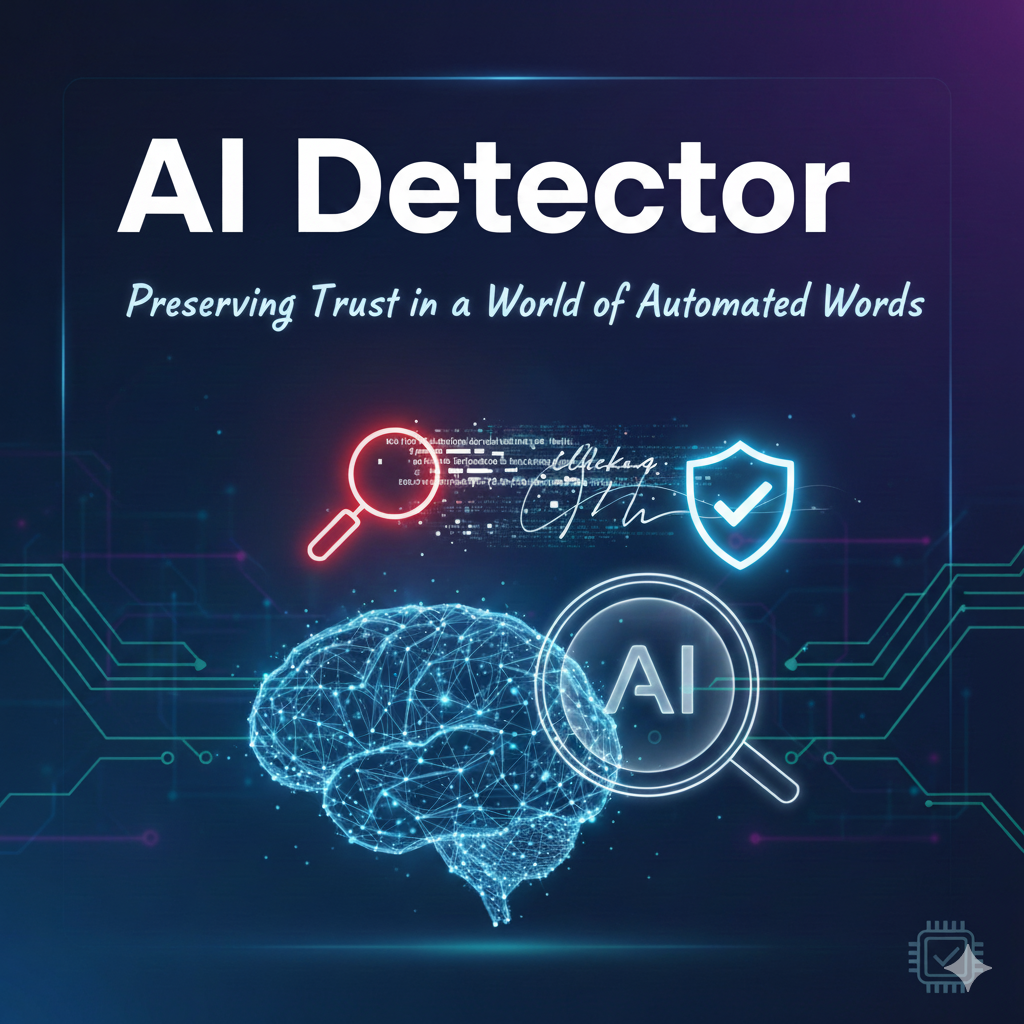
Artificial intelligence is no longer a distant idea from science fiction—it’s woven into our everyday lives. From automated emails and chatbots to essays and marketing copy, AI-generated content is everywhere. As this technology grows smarter, a new challenge has emerged: how do we tell what’s written by a human and what’s produced by a machine? This is where an AI detector steps into the spotlight.
An AI detector is a specialized tool designed to analyze text and determine whether it was likely created by artificial intelligence or a human writer. While this might sound simple, the reality is far more complex. Modern AI systems are trained to mimic human tone, sentence structure, and even creativity. Detecting them requires a deep understanding of language patterns, probabilities, and subtle linguistic signals.
Why AI Detectors Matter More Than Ever
The rise of AI-generated content has created both opportunities and concerns. On one hand, businesses can produce content faster, students can brainstorm ideas, and creators can overcome writer’s block. On the other hand, unchecked AI use raises serious questions about originality, authenticity, and trust.
Educational institutions use AI detectors to protect academic honesty. Teachers want to ensure students are learning and expressing ideas themselves, not simply submitting machine-generated answers. In journalism and publishing, editors rely on AI detection tools to maintain credibility and prevent misinformation. Even search engines and marketing agencies are increasingly interested in identifying AI-written material to maintain content quality standards.
In short, an AI detector helps preserve transparency in a world where the line between human and machine writing is becoming blurred.
How an AI Detector Works Behind the Scenes
At its core, an AI detector examines how text is written rather than what it says. Human writing tends to include small imperfections—unexpected phrasing, emotional nuance, and natural rhythm shifts. AI-generated text, while polished, often follows predictable structures and statistical patterns.
Most AI detectors evaluate factors such as sentence variation, word distribution, repetition tendencies, and contextual flow. Some tools compare text against known AI language models, while others rely on probability scoring to estimate the likelihood of machine involvement. Instead of giving a simple yes-or-no answer, many detectors provide a confidence percentage, allowing users to interpret results more thoughtfully.
It’s important to understand that AI detection is not magic. These tools do not “read minds.” They analyze patterns, which means results should always be used as guidance rather than absolute proof.
Common Uses of AI Detectors
The demand for AI detection tools spans across multiple industries. In education, students and teachers use them to double-check assignments and maintain fairness. Content creators and bloggers rely on AI detectors to ensure their work feels natural and human, especially when originality is a priority.
Recruiters may use AI detectors to review cover letters and applications, ensuring candidates are genuinely expressing themselves. Meanwhile, website owners and SEO professionals use these tools to evaluate content quality and avoid potential penalties associated with overly automated material.
Even individual users benefit. Writers who use AI as a drafting assistant often run their final work through an AI detector to refine tone, add personality, and reduce machine-like patterns.
Strengths and Limitations You Should Know
An AI detector can be incredibly helpful, but it is not flawless. One of its greatest strengths is speed—it can analyze large amounts of text in seconds. It also raises awareness, encouraging users to think critically about content creation and originality.
However, false positives can occur. A well-structured human-written article may sometimes be flagged as AI-generated, while heavily edited AI content might pass as human. Language, writing style, and even subject matter can influence results.
That’s why the best approach is balance. AI detectors work best when used alongside human judgment, not as the sole decision-maker.
The Future of AI Detection
As artificial intelligence evolves, AI detectors must evolve too. The relationship between content generators and detection tools is a constant race. Newer detectors are becoming more adaptive, learning from emerging writing styles and advanced models.
In the future, we can expect AI detectors to become more transparent, offering clearer explanations instead of simple scores. Rather than acting as strict gatekeepers, they may function more like writing assistants—highlighting areas that feel unnatural and helping writers improve clarity and authenticity.
Ultimately, the goal is not to ban AI, but to use it responsibly.
Final Thoughts
The AI detector has become an essential tool in the modern digital landscape. It supports honesty, protects originality, and helps users navigate a world where machines can write almost as well as humans. Whether you are a student, writer, editor, or business owner, understanding how AI detectors work empowers you to create better, more trustworthy content.
In an era driven by smart technology, the real value lies in knowing when a human voice truly matters—and AI detectors help us keep that distinction alive.

 Spanish
 English
 French
 German
 Portuguese (Portugal)
 Italiano
 Japanese
 Russian
 Korean